Skip to content

Harmful Algal Blooms threaten human and ecosystem health, and disrupt aquaculture and wild fisheries, tourism, and other resources in marine and freshwater systems.

What are Harmful Algal Blooms (HABs)?

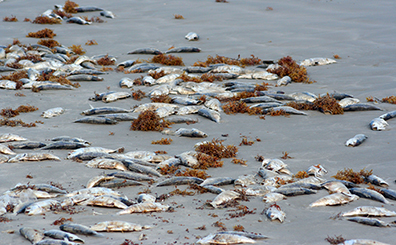
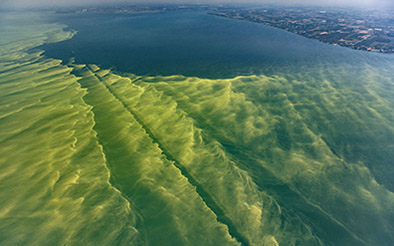
Marine and fresh waters teem with life, much of it microscopic and most of it beneficial and harmless. There are, however, some species of algae and cyanobacteria that cause harm, either through the production of potent toxins or through the accumulated biomass during their “blooms”. Impacts include human and wildlife illness and mortality, ecosystem disruption, and economic losses to coastal communities.
HAB Species

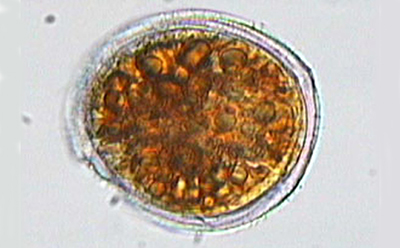
Learn about different toxic or harmful algal species, and the poisoning syndromes they cause

Maps

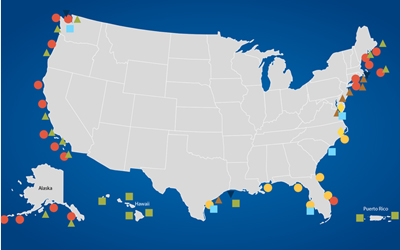
See where harmful algae are distributed in the U.S. and around the world

Impacts

Discover how harmful algal blooms impact human health and coastal economies, wildlife, ecosystems, and more
Research

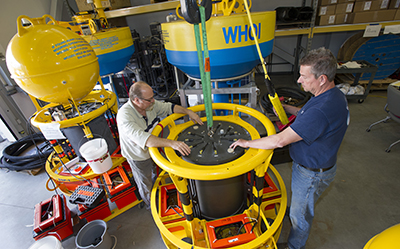
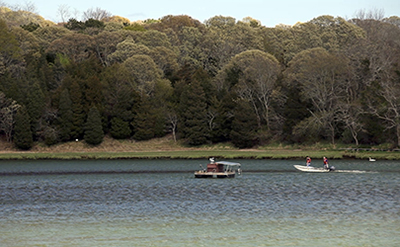
Learn about the national and international research programs focused on understanding, managing, and preventing harmful algal blooms

Resources

Major programmatic and informational resources regarding harmful algal blooms, as well as fact sheets and hotlines

Response

Programs and activities focused on prediction, control, mitigation, and HAB event response

News and Announcements
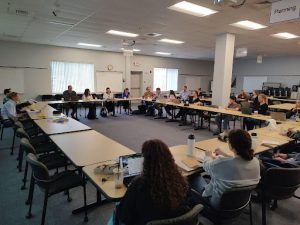
Tabletop planning exercise – preparing for HABs in the Gulf of Maine

HAB researchers, state managers, and federal partners recently came together at the 2026 Gulf of Maine Harmful Algal Bloom Science Symposium to strengthen regional preparedness for future toxic Pseudo-nitzschia blooms. Through a first-of-its-kind tabletop planning exercise, participants explored bloom scenarios, response strategies, and the monitoring tools needed to better protect public health and shellfish resources.

Read more about the workshop and how collaborative planning is helping improve harmful algal bloom response across the region: https://coastalscience.noaa.gov/news/nccos-supported-workshop-strengthen-future-hab-response/

Read More

NCCOS Supports Puerto Rico’s Sargassum Emergency Response

In 2025, record-breaking levels of Sargassum drifted through the tropical Atlantic, heavily impacting Puerto Rico’s coastlines. In response, Governor Pedro Pierluisi declared a state of emergency on June 30, 2025. To support these efforts, the National Centers for Coastal Ocean Science (NCCOS) Harmful Algal Bloom Event Response Program is funding expanded Sargassum response activities. Led by Mar Caribe Consulting LLC in partnership with the Puerto Rico Department of Natural and Environmental Resources and the Puerto Rico Coastal Zone Management Program, the project will enhance monitoring at six coastal sites. Read the full news release to learn more about this ongoing response effort.

Read More

Register now! 13th U.S. Symposium on Harmful Algae

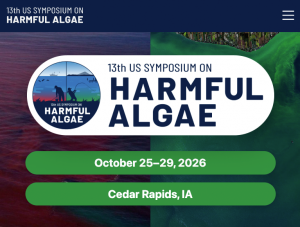
Early registration is now open for the 13th U.S. Symposium on Harmful Algae (US-HABs 2026), to be held October 25–29, 2026 in Cedar Rapids, Iowa. Researchers, students, and professionals working on all aspects of harmful algal blooms are invited to register and attend.

Read More

U.S. National Office for Harmful Algal Blooms Releases National Science Strategy for Harmful Algal Research and Response

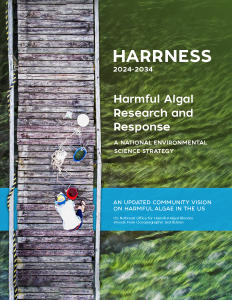
The U.S. National Office for Harmful Algal Blooms (HABs) at the Woods Hole Oceanographic Institution (WHOI) has released a comprehensive national science strategy outlining a decade-long roadmap aimed at enhancing our understanding, monitoring, and management of HABs. “HARRNESS 2024-2034: Harmful Algal Research and Response, A National Environmental Science Strategy” defines the magnitude, scope, and diversity of the HAB problem in United States’ marine, brackish and freshwaters; addresses knowledge gaps; strengthens coordination among agencies, stakeholders, and partners; advances the development of effective research and management solutions; and builds resilience to address the broad range of HAB impacts to vulnerable communities and ecosystems in the USA.

Read More

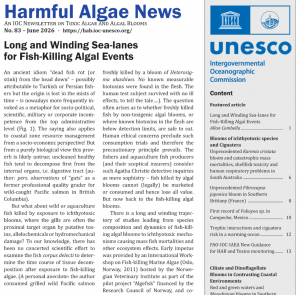
HARMFUL ALGAE NEWS No. 83 now available

HARMFUL ALGAE NEWS No. 83 is now available! Be sure to check it out HERE

Read More

Announcing the Karen A. Steidinger Marine Harmful Algae Taxonomy Course

The Bigelow Laboratory is pleased to offer training in marine harmful algae identification through the Karen A. Steidinger Marine Harmful Algae Taxonomy Course. This course provides expert training and a certificate of proficiency in harmful algae identification based on light microscopy, and provides familiarity with alternate identification technologies. It aims to meet an increasing need for comprehensive training for U.S. harmful algae managers, scientists and technicians.

Dates for the 2026 course are August 9th – 21st (inclusive of travel days), and applications are due June 1. For more information and registration guidance, please click HERE.

Read More

ICHA 2025 scientific program available!

Thank you for attending the 21st International Conference on Harmful Algae (ICHA) ! The final scientific program is available HERE.

Read More

Upcoming Conferences and Events

Interested in attending upcoming conferences, meetings, workshops, or other events related to HAB science? A timeline of  events of interest to the HAB community is available on the US HAB website, and updated periodically.  Please click  HERE to view the timeline & current listings, which are updated periodically. If you wish to post a meeting or event, please contact Harmful-Algae@whoi.edu. 

Read More

Educational and job opportunities in HAB Science!

HABs-related job openings, graduate student positions, and other opportunities are available HERE. Please check back frequently as listings are updated. If you wish to post a position or opportunity here, please contact Harmful-Algae@whoi.edu.

Read More